Drainage and filter checks
Dishwasher Standing Water After Cycle? 5 Safe Checks
If your dishwasher still has water in the bottom after the cycle ends, do not keep restarting it. Start by draining the water safely, then check the filter area, drain path, and sink-side connection before you pay for service.
Start the free standing-water diagnosis
At a glance
Time and difficulty
20 to 30 minutes
Low-risk maintenance · Homeowner or renter
Fast answer
Quick answer
Visible water across the bottom after a cycle can come from filter-well debris, a hose restriction, sink-side drainage trouble, or a disposal inlet problem. Start with safe drain-path checks before assuming an internal part failed.
Professional takeaway
What this symptom usually tells a technician
Standing water is a pattern, not a diagnosis by itself. The useful question is whether the machine is failing to push water out at all, or whether water is leaving and then returning through a shared drain path. That is why the most valuable clues are the filter condition, the sink behavior, and whether the symptom changed after disposal or plumbing work.
Usually points first to filter-well debris, sludge, or a slowed drain path rather than an immediate electrical failure.
Pushes the diagnosis outward toward the hose route, sink drain, air gap, or garbage disposal connection.
These are escalation clues. Routine maintenance may no longer be the right lane once those appear.
Visual guide
Two diagrams that make the drain path easier to understand
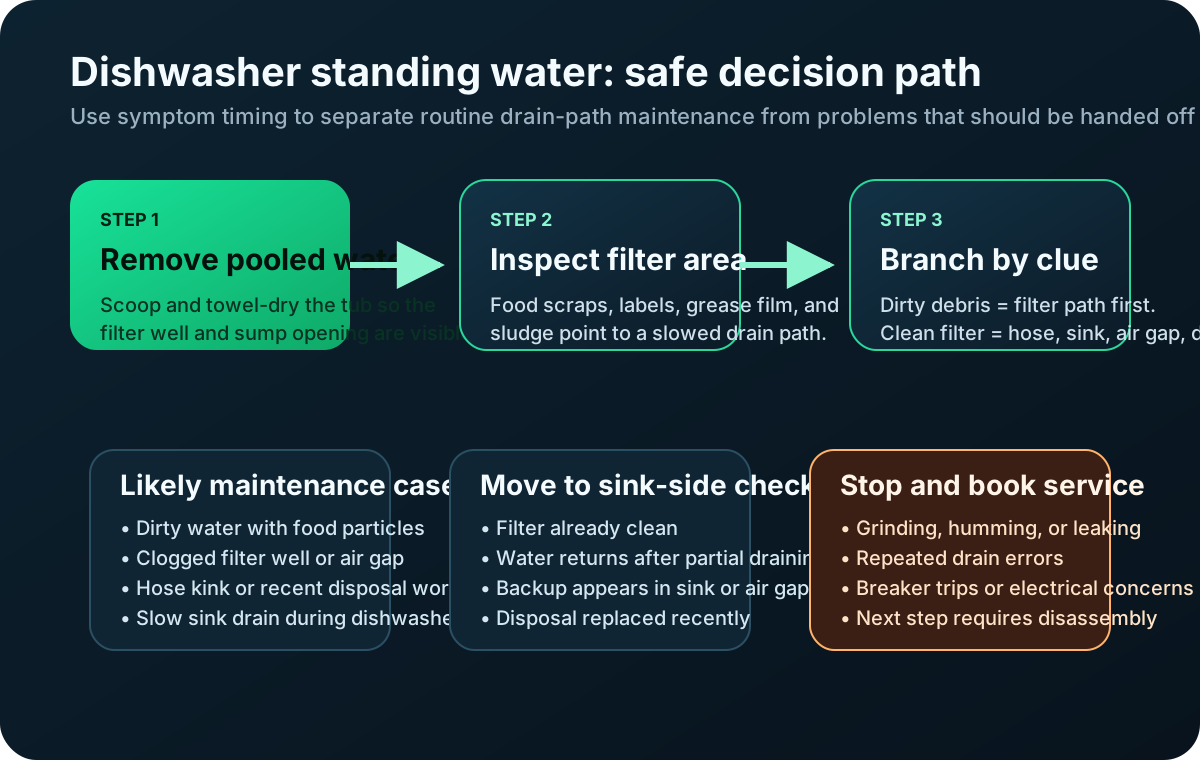
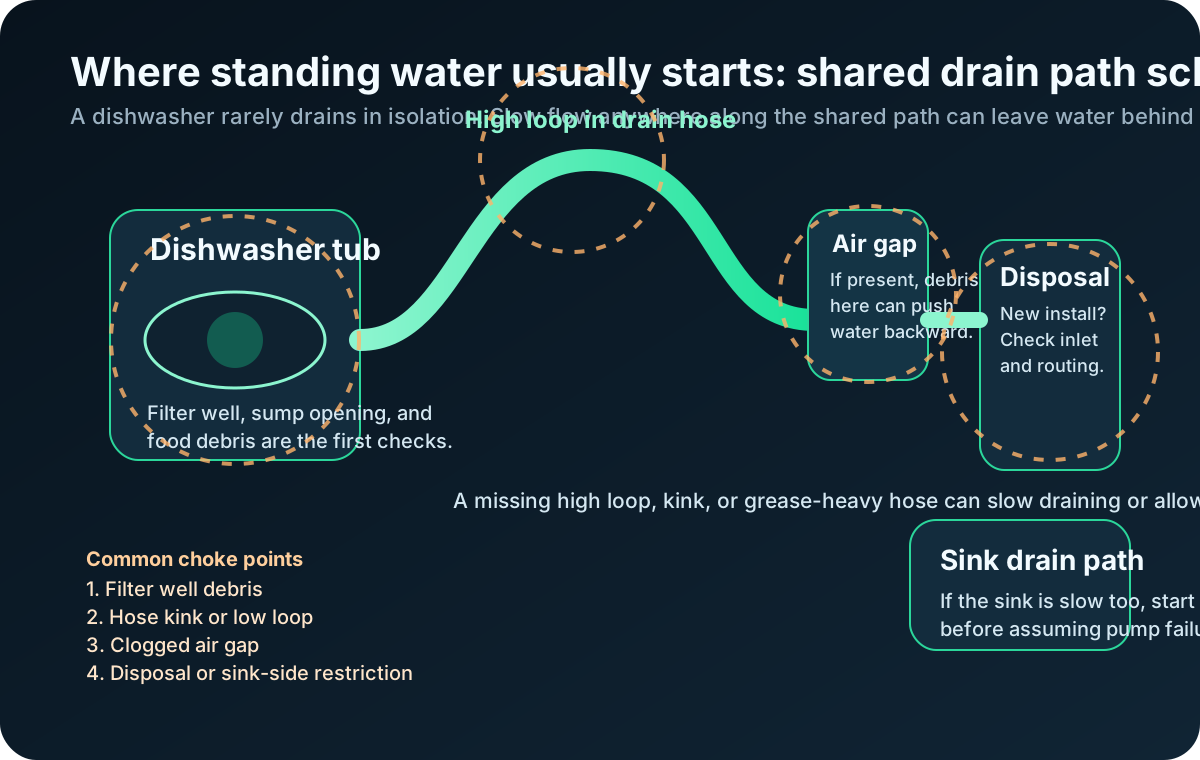
Start here
5 safe checks before you consider repair
- Scoop out the standing water first so you can actually see the filter area and sump opening.
- Remove and rinse the filter exactly as the owner manual shows, then wipe out scraps, film, and sludge from the filter well.
- Check whether the sink drains normally and whether the air gap or disposal connection looks restricted.
- Look for a kink, low spot, or recent change in the dishwasher drain hose route.
- Stop and book service if the machine still hums, grinds, leaks, or leaves water after the simple path checks are done.
Why this order matters: it prevents readers from jumping straight to pump-failure assumptions when the visible symptom is still consistent with routine drain-path maintenance.
Normal vs not normal
When water in the bottom is worth worrying about
A little water hidden in the sump can be normal on many dishwashers. What is not normal is water visibly spread across the bottom of the tub after the cycle ends, especially if it smells bad, looks greasy, or returns quickly after you clean the filter area.
That visible standing water is the clue most readers mean when they search for dishwasher standing water after cycle or water in bottom of dishwasher after cycle. It usually points to slow drainage, not just leftover moisture.
Quick diagnosis
What the water looks like — and what each type usually means
Standing water is not all the same. The appearance and timing give you strong clues about where to look first:
First determine whether the water is only below the filter surface or visibly spread across the tub floor. Compare the level with the owner manual before treating it as a fault.
Start with the removable filter and visible filter well. Debris there supports a maintenance check, but it does not prove that the filter is the only restriction.
Stop repeated cycles and verify that the product is automatic-dishwasher detergent. Follow the appliance manual and detergent label for type and dose; do not apply a universal dose reduction.
Classic sink-side backflow. The dishwasher drains successfully, but water from the sink or disposal flows back through a shared drain path. Check the air gap, high loop, and backflow path.
Inspect and clean only the removable filter and visible surfaces allowed by the manual. Do not assume an empty hot cycle or chemical cleaner is compatible with every model.
If the water color is unusual, check for a rusting dish rack, a loose metal item in the sump, or hard-water mineral deposits carrying iron. This is less about drainage and more about water quality or internal corrosion.
Drain it first
How to drain a dishwasher with standing water safely
Turn the dishwasher off and let hot water cool before reaching inside. Scoop out as much water as you can with a cup or ladle, then use towels or a sponge to clear the rest. Once the bottom is mostly dry, remove the filter and clean the visible filter well so you can tell whether scraps, labels, or grease are blocking the drain path.
This first step matters because repeated test cycles can waste time and sometimes make the mess worse. Clear visibility helps you separate a simple debris problem from a deeper drain-path problem.
Model-specific boundary
Use the model number before interpreting parts or error codes
Filter design, retained-water level, drain routing, cancel-and-drain behavior, and error-code meanings vary by model—not just by brand. Find the model number on the door edge or tub frame, then use the manufacturer’s manual for the exact filter-removal and drain instructions.
Do not remove a pump cover, chopper, check valve, or electrical panel because a generic article associates that part with your brand. If the manual-safe checks end without a clear change, preserve any displayed code and give the model number, timing, water level, and drain sound to qualified service.
Diagnosis path
What standing water after the cycle usually means
- If the water is dirty or full of food particles, the filter area or drain path is a more likely cause than an electrical failure.
- If the filter is clean but the water still returns, the next suspects are the hose route, sink drain, air gap, or garbage disposal connection.
- If the machine hums, grinds, leaks, or shows drain-related errors, routine maintenance has probably reached its limit.
If the cycle finishes and the drain still seems nonfunctional rather than just slow, move next to Dishwasher Won't Drain Completely for a symptom-specific checklist.
Unclog checks
How to unclog a dishwasher with standing water without overreaching
Most homeowner-safe unclogging starts with the obvious path: filter, sump opening, drain hose route, air gap if you have one, and the sink or garbage disposal connection. Look for grease buildup, a hose kink, or a recently installed disposal that may still have the knockout plug in place. If the hose path looks suspicious under the sink, compare those clues with Dishwasher Drain Hose Clogged Symptoms.
What you should not do is pry into sealed pump housings, disconnect wiring, or keep guessing once the next step leaves household maintenance territory. If the easy drain path looks clear but the symptom does not change, the problem may be deeper than a surface clog.
Best next branch
If the filter is already clean
A clean filter changes the diagnosis. It does not automatically mean the drain pump is bad, but it does mean you should stop treating the filter as the main suspect and move outward toward the hose and sink-side path.
Use Dishwasher Water In Bottom After Cycle But Filter Is Clean if you already did the filter work and need the next safe checks.
Timing clue
If the problem started after a garbage disposal change
A newly installed garbage disposal is one of the strongest clues in this topic. If the dishwasher stopped draining right after disposal work, the disposal inlet may still be sealed or the hose may have been reconnected poorly.
Check Dishwasher Not Draining After Garbage Disposal Replaced, Dishwasher Drains Into Sink When Running, and Dishwasher Air Gap Overflowing if the symptom lines up with sink-side plumbing changes.
Backflow clue
If water seems to come back after the cycle
Sometimes the dishwasher drains partially and then ends up with water again because the sink-side path is backing up. A slow sink, blocked air gap, poor hose routing, or disposal-side restriction can let dirty water move the wrong direction.
If that sounds familiar, read Dishwasher Drains Then Fills Back Up, Dishwasher Drains Into Sink When Running, or Dishwasher Full Of Water In The Morning for the branch that best matches the timing.
Know when to stop
When standing water means it is time to call for service
- The dishwasher still ends with pooled water after the filter area and sink-side path have been checked carefully.
- The machine hums, grinds, leaks, trips a breaker, or shows repeated drain errors.
- The next step would require opening electrical parts, pump components, or hard-plumbed connections you are not comfortable handling.
Common questions
FAQ
- Is some water left in the dishwasher normal? A small amount hidden in the sump can be normal, but visible water across the bottom after the cycle should be checked.
- Can a dirty filter cause standing water? Yes. A dirty filter or debris trapped below it is one of the most common reasons a dishwasher leaves water behind.
- Why is there water in the bottom of my dishwasher after the cycle? Start with the filter, drain path, sink connection, and garbage disposal inlet before assuming a failed pump.
Prevention
How to prevent standing water from coming back
Once you have cleared the current standing water, a few habits make it much less likely to return:
- Scrape according to the manual. Remove bones, labels, pits, and other hard debris before loading, while avoiding unnecessary pre-rinsing when the appliance instructions advise against it.
- Inspect the filter on the model-specific schedule. Filter design and cleaning intervals vary. Rinse and reinstall a removable filter only as its manual describes. Use the maintenance checklist as a reminder, then defer to the model instructions.
- Use only an approved cleaning routine. If the manual recommends a machine-clean cycle or named product type, follow its dose and placement. Do not mix cleaners or assume a hot empty cycle suits every appliance.
- Recheck visible hose routing after under-sink work. Confirm that stored items have not crushed the hose and that the installer’s required high loop or air gap remains in place.
- If you install a new garbage disposal, verify the knockout plug was removed. Missing this plug is a surprisingly common cause of sudden standing water after what should be routine plumbing work.
- Match hardness care to measured conditions. Use a utility report or suitable test, then follow the appliance manual for salt, softener, detergent, or descaling guidance. Avoid a universal acid treatment or fixed interval.
Fact check
Sources and scope notes
- Whirlpool Product Help: Dishwasher Not Draining — filter, sump, hose routing, sink connection, air-gap, disposal, and service handoff guidance.
- GE Appliances: Water in the Bottom of the Tub — normal residual water and high-loop backflow guidance.
- Use the owner manual for the exact filter, hose, air-gap, and disposal arrangement on your model and installation.
Keep reading